Articles Tagged with

If a customer has asked for ISO certification before they will sign, or a tender requires it before you can even bid, waiting months for paperwork and site visits is rarely an option. That is exactly why online ISO certification has become a practical route for SMEs that need recognised certification quickly, affordably and without pulling managers away from the day job.
For smaller businesses, the appeal is obvious. Traditional certification routes can feel slow, expensive and heavier than they need to be. Online delivery changes that. When the process is built properly, you still get a rigorous assessment of your management system, but with less disruption, fewer delays and a clearer path from enquiry to certificate.
What online ISO certification actually means
Online ISO certification does not mean cutting corners or buying a certificate. It means the implementation support, document review, audit planning and certification assessment are handled remotely through digital systems, video calls and secure document sharing rather than repeated on-site meetings.
That distinction matters. A credible online process still requires your business to put the right policies, procedures and controls in place. You still need evidence that your system works in practice. What changes is the delivery model. Instead of arranging travel, meeting rooms and long site-based audit days, your team can work through the process online with a far lighter admin burden.
For an SME, that usually means less downtime for operational staff, faster feedback on documents and a simpler way to keep records organised. It also makes certification more accessible for businesses operating across multiple locations or with hybrid teams.
Why SMEs are moving to online ISO certification
The main reason is commercial pressure. Many businesses are not pursuing ISO standards for abstract compliance goals. They need certification to win contracts, satisfy customer requirements, strengthen processes or show that risk is being managed properly.
When speed matters, online delivery is often the better fit. Documents can be reviewed faster, consultancy support can be scheduled around live workloads and audits can be arranged without the delay that comes with travel logistics. That can be the difference between meeting a tender deadline and missing it.
Cost is the other major factor. Smaller firms are rightly cautious about paying enterprise-level fees for a system that is more complicated than they need. An online-first model strips out a lot of unnecessary overhead. That makes certification more affordable, especially when templates, guidance and consultancy are included rather than sold separately.
There is also a practical point that gets overlooked. Many SMEs do not have an in-house ISO specialist. They need plain-English support, a clear process and sensible timescales. Digital delivery works well when it is designed to guide non-specialists through each stage without overwhelming them.
Which standards can be certified online?
Most of the common management system standards used by SMEs can be delivered effectively online. That includes ISO 9001 for quality management, ISO 14001 for environmental management, ISO 45001 for health and safety, ISO 27001 for information security, ISO 22301 for business continuity, ISO 50001 for energy management and ISO 42001 for AI management systems.
The right standard depends on the pressure your business is responding to. A manufacturer may need ISO 9001 to strengthen supplier approval. A contractor may be pushed towards ISO 45001 because clients want stronger health and safety assurance. A software or IT business may find ISO 27001 increasingly necessary when handling sensitive data.
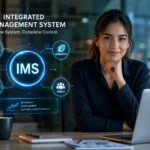
Sometimes one standard is enough. In other cases, an integrated management system makes more sense, particularly if you need quality, environmental and health and safety certification together. Combining standards can reduce duplication, but it does require a bit more planning at the start.
How the online process usually works
A good online certification process should feel straightforward from day one. First, the scope of the certification is agreed. That means defining what part of the business, what services or products, and which locations are covered.
Next comes implementation. This is where your policies, procedures, registers and records are built or refined so they match the chosen standard(s). For SMEs, this stage is often the biggest hurdle, not because the requirements are impossible, but because teams are busy and unsure what good documentation looks like. That is why practical templates and consultancy support make such a difference.
After that, the system needs to be used. ISO standards are about more than documents. You will need evidence of activities such as internal audits, management reviews, corrective actions, objectives and performance monitoring. The exact detail varies by standard, but the principle is the same – the system has to operate, not just exist on paper.
The audit stage then reviews whether your management system meets the standard(s) and whether it is being followed in practice. Online audits typically involve document review, interviews over video call and examination of records shared through a secure portal. If any issues are raised, they are addressed before certification is issued.
The trade-off: speed versus readiness
Fast certification is possible, but only if the business is ready to engage with the process. That is the part worth being honest about.
Some SMEs can move very quickly because they already have decent operational controls and just need those controls aligned to an ISO framework. Others need more support because processes are informal, responsibilities are unclear or records are inconsistent. In those cases, rushing usually creates more work later.
The best online providers do not simply promise speed. They create the conditions for speed by simplifying implementation, giving clear direction and keeping everything in one place. That is why digital portals and guided workflows are so useful. They reduce the time lost to version control problems, missed actions and endless email chains.
What to look for in an online provider
Not every online service is built the same way. Some providers offer little more than a checklist and leave you to figure out the rest. For a small business with limited time, that can quickly become frustrating.
A better model combines certification with real support. Look for a provider that offers practical consultancy, standard-specific templates, clear pricing and remote audits that work around your operations. If they can also support multiple standards and renewal planning, that saves a lot of effort as your compliance needs grow.
It is also worth checking how progress is managed. A secure digital portal is more than a nice extra. It gives your team one place to track actions, store documents and prepare for audit. That level of visibility makes the process easier for directors, managers and compliance leads alike.
ISO-Cert Online Ltd is built around exactly that SME requirement – fast, affordable online certification with guidance, templates, remote auditing and digital tracking in one place.
Common concerns about going fully online
One concern is whether a remote process can properly reflect how a business operates. In most cases, yes – provided the audit is well planned and evidence is available. Video meetings, live document reviews and structured interviews can give auditors a clear view of how your management system works.
Another concern is staff capacity. This is a fair point. Even with strong support, someone inside the business needs to coordinate information, attend meetings and keep actions moving. The process is lighter online, but it is not passive.
There can also be sector-specific considerations. Highly complex operations, heavily regulated environments or businesses with unusual risks may need more tailored support than a basic online package provides. That does not rule out remote certification, but it does mean the provider should understand your sector and adapt the approach.
Is online certification right for your business?
If your priority is to get certified quickly without overspending or disrupting the business, online certification is often the most sensible route. It suits SMEs that want a clear process, responsive support and a commercially realistic timescale.
It is especially effective when you need recognised certification for tenders, customer approval, supplier onboarding or internal improvement and you cannot justify the drawn-out admin of a traditional route. The combination of lower overheads, remote auditing and guided implementation makes it a strong fit for lean teams.
What matters most is not whether the process happens online or on site. It is whether the certification journey is well managed, proportionate to your business and supported by people who know how to get SMEs over the line without overcomplicating it.
If certification has been sitting on your to-do list because it seemed too slow, too expensive or too difficult to manage internally, online delivery changes the equation. With the right support, ISO standards become far more achievable than most businesses expect.
Ready to get started?
Contact us today on +44 (0)333 014 7720 or email info@isocertonline.net for a free consultation. You can also get a quote online in minutes.
With ISO-Cert Online, ISO certification is affordable for every business.





Recent Comments