Articles Tagged with

Integrated Management System UK

Home / Integrated Management System UK
Article, News

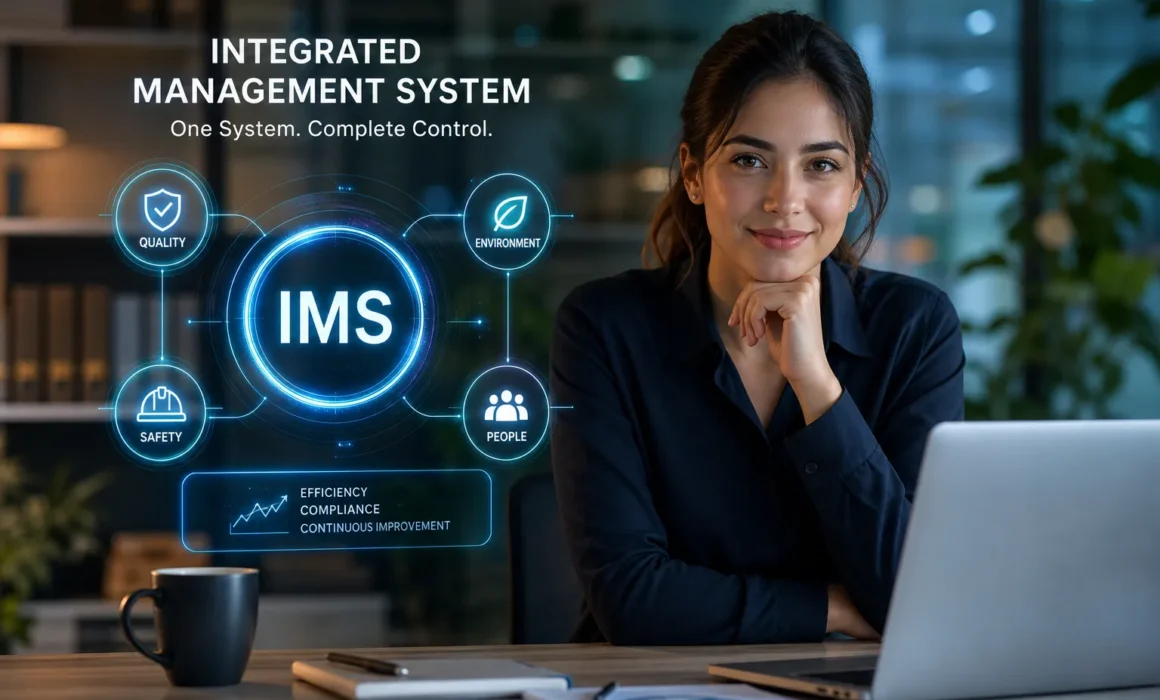
Integrated Management System UK: What It Is and How It Works

You’ve worked hard to achieve your first ISO certification. Now a key client is asking for a second standard, or a tender requirement has landed on your desk specifying three. The moment you start running two separate management systems, the administrative overhead increases significantly: two audit cycles, two sets of policies, two internal audit programmes, and two sets of annual fees. It quickly starts to feel like operating parallel businesses inside the same organisation.

This is exactly the problem an integrated management system (IMS) is designed to solve. Rather than treating each ISO standard as its own silo, an integrated management system brings two or more standards together into a single coordinated framework. You manage one system, undergo one audit cycle, and maintain one set of shared documentation. ISO-Cert Online Ltd has made single-audit IMS certification accessible to UK SMEs without dedicated compliance teams, at a fixed, transparent price point.

This article covers what an IMS actually is, which standards get combined most often, how to build one from the ground up, what auditors look for at certification, and what it realistically costs. By the end, you’ll have a clear picture of whether the integrated route makes sense for your business.

What an integrated management system actually is

The core idea: one system, not three folders

An IMS is not a separate ISO standard you apply for. It’s a design decision. Instead of running three management systems that each have their own policies, risk assessments, internal audits, and management reviews, you build one system that satisfies the requirements of all your chosen standards simultaneously. The structure is shared; only the domain-specific requirements sit apart.

Any well-built integrated management system rests on the same core components: a unified policy and objectives, shared documentation and record control, integrated risk management, a single internal audit programme, and one management review cycle. These aren’t duplicated for each standard, they’re designed once and built to serve all of them. That’s where the real efficiency comes from.

Why the Harmonized Structure makes this practical

ISO deliberately designed its modern management system standards to share the same high-level clause sequence. This framework, formally known as the Harmonized Structure (previously called Annex SL), runs from Clause 4 (context of the organisation) through to Clause 10 (improvement). ISO 9001, ISO 14001, and ISO 45001 all follow this same skeleton, which means the shared requirements covering leadership, planning, support, performance evaluation, and continual improvement can be written once and applied across all three.

This structural alignment is what makes an integrated management system practical rather than just a good idea on paper. The groundwork is already done inside the standards themselves. Your job during implementation is to build your system to take advantage of it, rather than recreating the same clauses three times over in three separate folders.

Which ISO standards businesses typically combine

The most common integration sets

The most frequently combined set is ISO 9001 (quality management), ISO 14001 (environmental management), and ISO 45001 (occupational health and safety). This trio is particularly common in manufacturing, construction, and operations-heavy environments where quality, environmental impact, and worker safety are all active concerns. Their requirements genuinely overlap in areas like operational planning, risk assessment, competence and training, internal audit, and continual improvement.

ISO 27001 (information security management) is increasingly added by technology companies and businesses handling sensitive client data. ISO 50001 (energy management) is a natural addition for energy-intensive organisations, and ISO 22301 (business continuity) is frequently included by businesses where service resilience is critical. An IMS isn’t a fixed combination, it scales with whatever standards your business actually needs, making it a flexible form of integrated ISO management.

Where the standards diverge, and why that’s fine

Each standard also carries domain-specific requirements that can’t be shared across the whole system. ISO 14001 requires an assessment of environmental aspects and impacts. ISO 45001 requires formal hazard identification. ISO 27001 goes further, requiring a formal information security risk treatment plan and a structured approach to asset classification. These requirements sit alongside the shared structure rather than conflicting with it. A well-designed IMS handles them as discipline-specific modules within one overall framework, not as separate systems bolted awkwardly together.

How to build an integrated management system: a practical implementation roadmap

From gap analysis to go-live

Implementation follows a clear progression. Start by defining your scope: which standards you’re integrating and what business outcomes the IMS needs to support. Then secure leadership alignment, because an IMS that lacks genuine buy-in from the top rarely survives contact with day-to-day operations. After that comes a gap analysis comparing your current practices against the combined requirements of all chosen standards. This stage is where most of the design decisions get made, and it’s worth taking seriously.

Once the gaps are mapped, you move into process and documentation design: creating shared policies, procedures, and work instructions that satisfy all applicable clauses without duplication. A phased rollout follows alongside employee training and a full cycle of internal auditing before the certification stage.

Timelines vary considerably depending on your starting point. SMEs building on an existing certified standard can often reach certification readiness in 3 to 6 months, but businesses starting from scratch or integrating more than three standards should typically allow 6 to 12 months. Existing management maturity, team capacity, and the number of standards involved all affect the pace.

Documentation: what you actually need

A common concern is that an IMS means three times the paperwork. It doesn’t. The goal is shared documentation where requirements align, and standard-specific documentation only where they genuinely diverge. Auditors expect an integrated policy, a scope document, and shared procedures for risk management, internal audit, corrective action, and management review. Standard-specific procedures cover the unique requirements, such as environmental aspects registers for ISO 14001 or hazard and risk assessments for ISO 45001.

The guiding principle here is worth remembering: documents should exist because they help you run the system, not because they fill a folder. Over-documentation is one of the most common ways IMS projects grind to a halt, so keep it lean and purposeful from the start.

Common pitfalls that slow businesses down

The gap analysis stage catches most businesses out, but it’s rarely the only stumbling block. The first mistake is treating integration as a filing exercise: putting three separate documents into one folder and calling it an IMS. Auditors see through this immediately, and it means you’ve gained none of the efficiency benefits. Rushing the gap analysis is the second problem; businesses that skip past this step tend to discover compliance gaps during the certification audit, which is the worst possible moment. The third pitfall is failing to train staff adequately, so the system exists on paper but not in practice.

Each of these is avoidable with proper planning. Build your shared processes first, verify them through internal audit, and make sure your team can explain what they do and why before the external auditor arrives.

Integrated management system certification: what auditors look for

How an integrated audit works

Rather than three separate certification audits with three separate audit teams, an integrated management system is assessed in a single audit against all your chosen standards simultaneously. The auditors examine the combined management system as a whole: shared processes, combined management review records, and a single internal audit programme that covers all standards rather than just one. This approach is typically faster, less disruptive, and cheaper than running separate audits.

The two-stage certification process still applies. Stage 1 reviews your documentation and assesses readiness; Stage 2 assesses implementation on the ground. Both stages cover all integrated standards in one process, so your team only goes through the experience once rather than repeatedly across different audit cycles.

What auditors are actually looking for

Auditors want to see that the system is genuinely integrated, not merely co-located. This means combined internal audit reports that cross-reference all standards, management review minutes that address all three domains, and staff who understand and follow shared procedures confidently. Experienced auditors are skilled at spotting a system assembled for the audit rather than operated in daily practice.

The most effective preparation is simply running the system properly from the start. If your internal audits are thorough, your management review is substantive, and your team understands the processes they follow, the certification audit becomes a confirmation of what you already know rather than an anxious test.

The business case: costs, timeframes, and where IMS fits for UK SMEs

What UK SMEs typically spend and get back

For a smaller UK business pursuing three-standard IMS certification, realistic Year 1 all-in costs (covering implementation support and certification fees) sit in the region of £3,200 to £12,000 depending on complexity and whether external consultancy is involved. A combined audit typically costs less than three separate audits, with indicative savings of roughly £700 to £2,500 per year on audit fees alone, though the actual figure varies by company size and audit scope. Documentation and admin overhead is often reported to run around 30% lower under an IMS compared with managing separate systems, and many SMEs find that the efficiency gains offset first-year investment costs within twelve months, though payback depends on your existing setup and the standards involved.

Timeframes for SMEs range from 3 to 6 months for businesses with an existing certified standard as a base, up to 12 months for those building from scratch across multiple disciplines. Surveillance visits are also consolidated under a single annual cycle, reducing the ongoing disruption that comes with staggered separate audits.

Why ISO-Cert Online Ltd makes this route accessible for SMEs

For SMEs without a dedicated compliance team, two barriers tend to dominate: cost uncertainty and process complexity. ISO-Cert Online Ltd is designed to address both. They offer single-audit IMS certification delivered entirely via remote audit, with a fixed-price model and a document portal that guides businesses through the documentation process step by step. You don’t need to know exactly where to start, the portal shows you.

Their scope covers multiple ISO standards including ISO 9001, ISO 14001, ISO 45001, ISO 27001, and ISO 22301, meaning most common IMS combinations can be handled under one provider, one process, and one annual audit cycle. For an SME managing multiple standards, that consolidation alone is worth considerable time and money each year. The service is built around the needs of smaller organisations, so the process is scaled appropriately rather than borrowed from an enterprise compliance model.

Is an IMS the right move for your business?

An integrated management system isn’t a luxury reserved for large organisations with compliance departments. It’s a smarter way for any business holding, or planning to hold, more than one ISO standard to manage its obligations without duplicating effort across parallel systems. The Harmonized Structure already does much of the structural heavy lifting at the standards level. Your job is to design shared processes that genuinely serve the business, then demonstrate through evidence that they work.

For UK SMEs looking to certify across multiple standards, the single-audit route is measurably more affordable and far less disruptive than managing separate certifications in parallel. The documentation is lighter, the audit process is streamlined, and the ongoing maintenance burden is significantly reduced.

If you’re ready to explore which IMS combination suits your business, visit ISO-Cert Online Ltd to find out more and get a fixed-price quote. One system, one audit, one straightforward path to certification.


Ready to get started?

Contact us today on +44 (0)333 014 7720 or email info@isocertonline.net for a free consultation. You can also get a quote online in minutes.

Don’t let cost hold you back from achieving ISO certification. With ISO-Cert Online, management systems certification is affordable for every business.

Posted on Google Google
Andrew Jackson profile picture
Andrew Jackson
4 September 2026
Google star 1Google star 2Google star 3Google star 4Google star 5Trustindex verifies that the original source of the review is Google.
I would like to provide the highest of recommendations to ISO-Cert Online Ltd. An extremely efficient and detailed service is provided and with all of the ISO Certifications which are required. The Integrated Management System that was provided to my Company is extremely thorough and already providing extremely great value and improvements to my Company. Their portal is also a great service to use currently and with regards to re-certification. I am greatly enjoying using the templates that were provided and they are extremely detailed. Claire and Steve are additionally extremely personable and highly responsive to any queries. ISO-Cert Online Ltd also provides great value for money and I am extremely glad that I chose to use their Company for ISO 9001 and 14001 certification.
Posted on Google Google
Tim Prestwood profile picture
Tim Prestwood
30 April 2026
Google star 1Google star 2Google star 3Google star 4Google star 5Trustindex verifies that the original source of the review is Google.
Our experience with ISO-Cert Online has been exceptional. Completing our ISO 9001 and 14001 certifications felt like a daunting task at the start, but the team made the entire process straightforward and manageable for us at Virdis Chemicals. Steve and Claire are extremely professional and supportive partners. They consistently go out of their way to explain complex processes and identify clear areas where we can improve our systems. We truly appreciate their guidance and the clear roadmap they provided for our assessment. If you are looking for expert support with ISO certification, I cannot recommend them highly enough.
Posted on Google Google
Info MK Medicals UK profile picture
Info MK Medicals UK
12 February 2026
Google star 1Google star 2Google star 3Google star 4Google star 5Trustindex verifies that the original source of the review is Google.
ISO-Cert Online Ltd have been excellent to work with. Their team is consistently professional, responsive, and supportive, helping us keep our ISO certifications fully up to date with confidence. They are always available to assist, provide clear guidance, and maintain outstanding customer relations. A reliable and knowledgeable partner that we highly recommend. — MK Medicals (UK) Ltd
Posted on Google Google
Christian Hallam profile picture
Christian Hallam
3 February 2026
Google star 1Google star 2Google star 3Google star 4Google star 5Trustindex verifies that the original source of the review is Google.
After purchasing ISO 9001 & ISO 14001 certification for my company. Claire & Steve took the time to explain everything and support us through the process of creating and applying the new management system. Great value for money. ISO Cert Online helped to simplify what can be a complicated and confusing process. Thank you
Posted on Google Google
NIkos Xiros profile picture
NIkos Xiros
3 November 2025
Google star 1Google star 2Google star 3Google star 4Google star 5Trustindex verifies that the original source of the review is Google.
Great company with excellent service. They’re always responsive, helpful, and ready to answer any questions you may have!
Posted on Google Google
Hannah Van-Der-Linden profile picture
Hannah Van-Der-Linden
24 June 2025
Google star 1Google star 2Google star 3Google star 4Google star 5Trustindex verifies that the original source of the review is Google.
We started looking at implementing ISO 9001 two years ago, and after numerous emails with Claire, we finally decided to embark on our ISO 9001 journey. We are now three months in and extremely grateful for the support and advice we've received. Steve has been instrumental in guiding us through the process. We’re looking forward to a long and successful working relationship with Steve and the team. - Greenway & Partners Ltd
Posted on Google Google
Aleks Dimitrova profile picture
Aleks Dimitrova
13 June 2025
Google star 1Google star 2Google star 3Google star 4Google star 5Trustindex verifies that the original source of the review is Google.
extremely quick and efficient, knowledgeable and responsive. Lovely Team, great company!
Posted on Google Google
Ali Madani profile picture
Ali Madani
5 November 2024
Google star 1Google star 2Google star 3Google star 4Google star 5Trustindex verifies that the original source of the review is Google.
Steve's service was absolutely amazing, extremely fast turnaround, the save me a lot of hassle and time and they are so efficient that I couldn't recommend this company enough, I can only describe their service in one word FANTASTIC Thank you Steve and your team. Ali Madani EezzeE Ltd
Posted on Google Google
Elaine B profile picture
Elaine B
22 October 2024
Google star 1Google star 2Google star 3Google star 4Google star 5Trustindex verifies that the original source of the review is Google.
Very professional service, easy to work with and delivered exactly what we asked for in the time frame quoted.
Posted on Google Google
Ged Riley profile picture
Ged Riley
18 October 2024
Google star 1Google star 2Google star 3Google star 4Google star 5Trustindex verifies that the original source of the review is Google.
Great support on all things ISO
Updates 2026
News

How Integrated Management Systems Boost Efficiency for UK SMEs

An integrated management system (IMS) is more than an administrative convenience. It is a strategic approach to unifying several management frameworks into a single, coherent structure. Instead of running quality, environmental and health and safety systems separately, an IMS brings them together so that policies, processes and objectives align across the business. This alignment streamlines decision making, eliminates duplicated efforts and provides clear accountability for performance.

Small and medium‑sized enterprises often struggle with limited resources. Maintaining multiple management systems can feel like an unnecessary burden. With an integrated approach, the same procedures can satisfy several standards at once. For example, a single risk assessment process can identify hazards in occupational health and safety, environmental impacts and information security vulnerabilities simultaneously. When employees follow one set of guidelines, training becomes simpler and compliance becomes part of everyday working practices.

The benefits extend beyond efficiency. Integrating standards improves consistency across departments. A unified system encourages teams to work toward shared goals rather than competing priorities. Quality objectives become aligned with environmental targets and safety commitments. When leadership reviews performance, they see the bigger picture rather than isolated metrics. This broader view supports continuous improvement because strengths and weaknesses across various areas become more apparent.

An IMS also reduces the volume of documentation. ISO‑certified organisations must maintain policies, procedures and records. If each standard requires separate documentation, administrative overhead grows quickly. Consolidating the requirements into a single manual and shared processes removes repetition. It also simplifies document control; updates flow through one system rather than several. Employees know where to find information and are less likely to overlook critical changes.

Cost Savings Through Integration

Cost savings are another attraction. Audits for each standard require preparation, time and resources. Integrating them means auditors can evaluate multiple standards in a single visit or remote assessment. This reduces disruption to the business and reduces the total number of audit days. The cost of certification and surveillance can drop significantly, particularly when working with a provider like ISO‑Cert Online Ltd who conducts assessments remotely. Remote audits also cut travel time and associated expenses, making the process more sustainable and accessible for SMEs.

Integration does not mean compromising on rigour. Each ISO standard retains its unique requirements. Instead, common elements like leadership commitment, risk‑based thinking, document control and internal audits are shared. For example, clause structures based on Annex SL make it easier to see where standards overlap. By mapping the clauses of ISO 9001, ISO 14001 and ISO 45001, businesses can design processes that satisfy all three simultaneously. Adding ISO 27001 or ISO 22301 into the mix introduces information security and business continuity concerns, but the overarching management system remains unified.

The Role of Technology

Technology plays a pivotal role in making integrated systems workable. Digital tools like ISO‑Cert Unite bring the management system to life, providing a central portal where documents, records and plans reside. Users can track tasks, monitor progress and generate evidence automatically. Because everything is online, stakeholders can collaborate in real time, even if they are in different locations. Automated reminders keep tasks on schedule, and dashboards provide a clear view of compliance status. This digital approach reduces human error and ensures that nothing falls through the cracks.

Getting Started with Integration

For businesses considering integration, a structured plan is essential. Start by reviewing the existing management systems and identifying overlaps. Engage employees to understand their daily challenges and gather feedback on what works and what doesn’t. Then map processes to the relevant clauses of each standard, looking for opportunities to combine activities. For instance, a single training programme can address quality awareness, environmental responsibilities and health and safety practices. By involving teams early, you foster ownership and reduce resistance to change.

Leadership must champion the IMS. Senior managers need to set unified objectives that reflect the organisation’s mission and values. Instead of separate goals for each standard, define shared targets, such as reducing waste while maintaining high product quality and ensuring worker safety. Regular performance reviews should examine progress against these goals and identify actions for improvement. When the leadership emphasises the interconnectedness of these objectives, employees understand that quality, environment and safety are not competing priorities but complementary pillars of sustainable success.

Communicating the Benefits

Communication is equally important. Clearly explain why an integrated approach benefits the business and its customers. Highlight the cost savings, reduced administrative workload and enhanced reputation that come from having multiple certifications. Clients increasingly expect suppliers to demonstrate robust management systems across several areas. An IMS signals that your business is forward‑thinking and committed to excellence in every facet of its operations.

Finally, choose a certification partner with expertise in integration. ISO‑Cert Online Ltd specialises in remote assessments and understands how to streamline the process for SMEs. Their consultants have experience with multiple standards and can help design a bespoke IMS that fits your organisation’s size and industry. They also provide up to four hours of free consultancy to new certification clients, ensuring you have the guidance needed to succeed.

An integrated management system is not just for large corporations. SMEs stand to gain the most from consolidating their quality, environmental, safety and information security efforts. By reducing duplication, improving consistency and cutting costs, an IMS frees up resources to focus on growth and innovation. In a competitive landscape where customers demand transparency and responsibility, integration demonstrates that your business takes its obligations seriously and is ready for the future.

ISO certification
Article, News

How ISO Standards Build Business Resilience in the UK

Resilience has become a watchword for modern businesses. Whether facing supply chain disruptions, cyber‑security threats or environmental challenges, organisations need systems that enable them to withstand shocks and adapt quickly. ISO standards provide a blueprint for resilience, helping companies develop robust processes and a culture of continual improvement. This article explores how different ISO standards contribute to business resilience and why an integrated approach can yield even greater benefits.

Quality management and consistency

A resilient business delivers consistent products or services regardless of external pressures. ISO 9001, the world’s most widely adopted quality management standard, establishes a framework for documenting processes, monitoring performance and embedding a culture of improvement. By standardising procedures and tracking metrics, companies can identify inefficiencies, reduce errors and quickly adjust to changes in demand or supply. Clients benefit from consistent quality, and businesses reduce waste and rework.

Maintaining ISO 9001 certification also signals to customers and partners that quality is a priority. This trust can be invaluable when market conditions become uncertain. Businesses that can demonstrate a solid track record of quality management are more likely to win tenders and retain clients during economic downturns.

Environmental responsibility and risk management

Environmental issues, from climate change to resource scarcity, pose significant risks. ISO 14001, the standard for environmental management systems, helps organisations identify and manage their environmental impacts. Companies that implement ISO 14001 reduce waste, improve resource efficiency and mitigate regulatory risks. In doing so, they not only protect the planet but also strengthen their long‑term viability.

Environmental performance is increasingly important to customers and investors. Demonstrating compliance with ISO 14001 can open doors to new markets, especially where sustainable procurement policies are in place. By proactively managing environmental risks, businesses avoid costly penalties, supply disruptions and reputational damage.

Protecting people through health & safety standards

Workplace accidents and occupational illnesses can have severe consequences for employees and the business. ISO 45001, the standard for occupational health and safety management systems, provides a structured approach to identifying hazards, assessing risks and implementing controls. A certified health and safety system promotes a safe working environment and reduces absenteeism, compensation claims and productivity losses.

During crises such as pandemics, businesses with strong health and safety management can adapt more effectively, ensuring that employees remain safe and operations continue with minimal interruption. Certification demonstrates to staff, regulators and clients that the organisation takes its duty of care seriously.

Securing information in the digital age

Information security breaches are among the most significant threats facing modern organisations. ISO 27001 sets out requirements for an information security management system (ISMS) that protects confidentiality, integrity and availability of data. Implementing ISO 27001 helps businesses identify risks, put in place appropriate controls and develop a culture of security awareness.

Certified organisations are better prepared to prevent data breaches and respond quickly if they occur. In an era where cyber‑attacks make headlines and data protection regulations (like GDPR) carry substantial penalties, ISO 27001 certification is both a competitive advantage and a critical component of risk management.

Keeping operations running with business continuity standards

Business continuity is the ability to continue operating during and after a disruption. ISO 22301 provides a framework for establishing, implementing and maintaining a business continuity management system. It guides organisations in identifying critical functions, assessing potential threats and planning responses. With robust continuity plans, businesses can minimise downtime and maintain essential services even in adverse circumstances.

Certification to ISO 22301 reassures clients and partners that the organisation is prepared for unexpected events, from natural disasters to cyber incidents. It also helps businesses meet contractual and regulatory requirements that mandate continuity planning.

Energy management and cost control

Energy costs are a significant operating expense, and inefficient energy use can erode competitiveness. ISO 50001 helps organisations establish energy management systems that reduce consumption, lower bills and improve environmental performance. Identifying energy wastage and investing in more efficient equipment can yield quick wins that free up capital for other resilience measures.

With energy prices subject to market volatility, businesses that control their energy use are less vulnerable to price spikes. ISO 50001 certification also demonstrates commitment to sustainability, enhancing corporate reputation and meeting the expectations of environmentally conscious clients.

Integrating standards for maximum benefit

While each ISO standard offers distinct benefits, integrating multiple systems can create synergies. For example, combining ISO 9001 (quality), ISO 14001 (environment), ISO 45001 (health and safety) and ISO 27001 (information security) into an integrated management system streamlines processes, reduces duplication and ensures that policies do not conflict. Integrated systems make it easier to train staff, conduct audits and manage documentation.

An integrated approach also simplifies decision‑making. Senior management receives a holistic view of performance across quality, environment, health and safety and information security. This supports more strategic planning and ensures that improvements in one area do not inadvertently create risks in another. For example, energy‑efficient equipment purchased under ISO 50001 considerations should also meet health and safety requirements under ISO 45001.

Building a culture of continual improvement

ISO standards share a common theme: continual improvement. Achieving certification is not an end point but the start of an ongoing journey. Businesses that embrace this philosophy foster resilience by regularly reviewing performance, learning from incidents and adapting processes. Staff become more engaged when they see that their feedback leads to tangible improvements, and management benefits from data‑driven insights.

Encouraging a culture of improvement also helps organisations stay ahead of regulatory changes and market expectations. When new legislation is introduced or customer requirements evolve, businesses with established management systems can incorporate changes into existing frameworks rather than scrambling to respond.

Communicating your commitment

Certification is only valuable if customers, suppliers and other stakeholders are aware of it. Businesses should promote their ISO certifications in proposals, on their website and through marketing materials. This not only reinforces credibility but also educates audiences about the importance of standards. By explaining how ISO certification supports quality, safety, security and sustainability, companies can set themselves apart from competitors.

ISO standards provide proven frameworks for managing risk, improving efficiency and enhancing reputation. By implementing and integrating relevant standards, businesses strengthen their resilience against a wide range of internal and external shocks. Organisations that invest in certification today are better equipped to face the uncertainties of tomorrow and to seize opportunities as markets evolve.


Find out more…

If you would like to find out more about ISO standards, or any of the other services we offer here at ISO-Cert Online, please contact us on 0333 014 7720 or email info@isocertonline.net.

A hand holding a set of gold cogs with a futuristic background.
Article

The Benefits of Integrating ISO Standards for UK Businesses

Home Integrated Management System UK

Are you a business owner or leader who has already implemented multiple ISO standards in your organisation? If so, you’ll know that it can be challenging to manage them all with the same focus and approach. But did you know that you can streamline your standards into an integrated management system (IMS)? So, in this article, we’ll explore the advantages of integrating ISO standards and how this will help you to streamline your success and experience a boost to your business.

Enhance efficiency:

By integrating your ISO standards, you can draw together how to approach your management systems. So instead of juggling separate processes and documentation for each standard you can use a unified framework. By doing this, you can optimise how you allocate resources, avoid duplication of effort, and increased efficiency in how you implement and maintain compliance across your business.

Create synergy:

Teamwork makes the dream work, right? And integrating your ISO standards helps you to develop closer working between your colleagues. Across your ISO standards, such as, ISO 9001, ISO 14001, ISO 27001, ISO 45001, ISO 50001, or ISO 22301 (to name a few), there are common elements or similar themes which you can organise into a comprehensive and harmonised system. Everyone pulling in the same direction brings with it fewer conflicting requirements, improved consistency and more effective communication and collaboration across your teams.

Save time and money:

Although the benefits of ISO certification are not in question, some businesses find that managing multiple ISO standards individually can be time-consuming and costly. Did you know that, by integrating ISO standards, you can simplify the overarching management process and make significant savings on operational downtime? This is because that there’s no need to conduct separate audits for each standard. You can also slim down the number of records and documentation you need to maintain. Plus, you can train your staff more quickly on an integrated management system than on several individual standards.

Reduce risks:

Integrating ISO standards enables you to identify and mitigate risks more effectively. Through joined-up thinking, your teams can work together to evaluate potential risks across your whole organisation. This can lead to much faster identification and more strategic risk management, which delivers greater protection for your business.

Encourage continual improvement:

At their core, ISO standards aim to support ongoing, continual improvement. Integrating your ISO standards supports the leaders in your business to think along the same lines when identifying areas of improvement, monitoring performance, and implementing corrective actions. This, in turn, encourages a common sense of approach, which can be calibrated across different teams, to continual improvement, advancing innovation and improving your overall business performance.

“Where appropriate, we always recommend that our clients consider integrating their management systems. It makes sense to work from a single manual rather than having to refer to multiple sets of documentation. And the benefits go far beyond simple efficiency, with clients reporting fundamental improvements in teamwork which have significantly improved morale and their bottom line!”

Claire Howard, Director of ISO-Cert Online Ltd

Next steps

At ISO-Cert Online Ltd, we specialise in helping businesses to achieve an integrated management system with ease. For more information on our services or to discuss your requirements please contact us on 0333 014 7720 or email info@isocertonline.net.

Privacy Settings
We use cookies to enhance your experience while using our website. If you are using our Services via a browser you can restrict, block or remove cookies through your web browser settings. We also use content and scripts from third parties that may use tracking technologies. You can selectively provide your consent below to allow such third party embeds. For complete information about the cookies we use, data we collect and how we process them, please check our Privacy Policy
Youtube
Consent to display content from - Youtube
Vimeo
Consent to display content from - Vimeo
Google Maps
Consent to display content from - Google
Spotify
Consent to display content from - Spotify
Sound Cloud
Consent to display content from - Sound