Articles Tagged with

SMEs

Home / SMEs
Cybersecurity
Article, News

How ISO 27001 Certification Strengthens Cyber Resilience for UK Businesses

In today’s digital economy, information is one of the most valuable assets a business possesses. Whether you handle customer data, financial records or intellectual property, protecting that data is critical to maintaining trust and meeting legal obligations. As the volume and sophistication of cyber attacks rise, information security is no longer a concern only for large corporations – small and medium‑sized enterprises are frequent targets because attackers perceive them as easier prey.

ISO 27001 provides a comprehensive framework for establishing, implementing and improving an information security management system (ISMS). Unlike ad‑hoc security measures, an ISMS is systematic, risk‑based and continually evolving. It starts by identifying the information assets that need protection and assessing the threats and vulnerabilities that could affect them. From there, it defines controls covering technology, people and processes to mitigate those risks.

The Value of Structure

One of the key benefits of ISO 27001 certification is structure. The standard lays out clear requirements for governance, leadership commitment, risk assessment, incident response, training and monitoring. Businesses often have informal security practices that depend on individual staff members. An ISMS formalises these practices and ensures that responsibilities are assigned and documented. This clarity helps everyone in the organisation understand their role in protecting information.

Certification also signals credibility. When customers see that a supplier holds ISO 27001 certification, they know that the organisation follows recognised best practice and has been independently audited. In sectors like technology, finance and healthcare, suppliers often need to prove that they have robust information security controls before they can win contracts. For SMEs, certification can therefore open doors to new markets and partnerships.

Meeting Regulatory Requirements

Modern regulations, including the General Data Protection Regulation (GDPR) and other privacy laws, impose strict obligations on data controllers and processors. ISO 27001 helps businesses meet these obligations by embedding privacy protection within the ISMS. Controls such as access restrictions, encryption, secure disposal and incident reporting are directly relevant to compliance. In the event of a data breach, documented processes enable rapid response and minimise the impact on individuals and the business.

Building Cyber Resilience

Cyber resilience is another outcome of ISO 27001. Resilience means the ability to withstand disruptions and recover quickly. By regularly assessing risks and testing controls, organisations uncover weaknesses before attackers do. Incident management procedures ensure that when an attack occurs, the response is coordinated and effective. Over time, lessons learned feed back into the system, creating a cycle of continual improvement. This resilience is particularly important for SMEs, who may not have the resources to survive a prolonged outage or reputational damage.

Implementing ISO 27001 does require commitment, but it doesn’t need to be a burden. The standard is flexible and scalable. Businesses can tailor controls to the size, complexity and nature of their operations. For example, a small consultancy might focus on secure file sharing, laptop encryption and staff awareness, while a manufacturer might emphasise network segmentation and physical security. The risk assessment process ensures that attention is focused on areas where threats are greatest.

Remote Work Challenges

Remote work has added new challenges to information security. Employees access systems from home networks and use personal devices more often than before. ISO 27001 helps organisations manage these risks by defining policies for remote access, multifactor authentication and secure communications. It also emphasises the importance of training employees to recognise phishing attempts and other social engineering attacks. Without this human element, technical controls alone cannot provide adequate protection.

Getting Certified with ISO‑Cert Online

Working with ISO‑Cert Online Ltd makes the certification process accessible to SMEs. Their fully remote assessment means that businesses can pursue ISO 27001 without the costs and disruptions associated with on‑site audits. Consultants guide you through risk assessment, control selection and documentation. The company’s experience with multiple standards also makes it easy to integrate information security with quality, environmental and health and safety systems if desired.

For businesses wondering whether ISO 27001 is worth the effort, consider the broader landscape. Cyber attacks continue to make headlines, and regulators impose heavy fines for data breaches. Customers are increasingly aware of privacy and security issues and may choose suppliers accordingly. An information security incident can be catastrophic for a small business’s reputation and bottom line. Investing in a systematic, recognised framework reduces these risks and demonstrates professionalism.

Securing certification is only the beginning. Maintaining it requires ongoing effort: regular internal audits, management reviews and updates to reflect changes in technology and threats. However, this ongoing attention ensures that information security remains at the forefront of business strategy rather than an afterthought. It encourages continuous learning and improvement, which ultimately benefits the entire organisation.

In conclusion, ISO 27001 certification is a powerful tool for building cyber resilience and trust. It provides a structured, scalable approach to information security that aligns with modern regulations and customer expectations. With remote assessments and expert guidance available from ISO‑Cert Online Ltd, SMEs can achieve certification without undue disruption. As cyber threats continue to evolve, a strong ISMS is an investment in long‑term stability, reputation and growth.


A construction worker, wearing a hard hat and hi-viz jacket smiles at the camera with three of her colleagues standing behind her.
Article

Celebrating your company’s ISO certification: how to inspire and motivate your team

Home › SMEs

You’ve just received your ISO certification – congratulations! Your achievement signifies your business’s commitment to delivering quality services, processes, and customer satisfaction. But how involved are your staff? Do they understand the importance of ISO, beyond celebrating your certification? In this article, we will look at practical ways to inspire your team and motivate them by fostering a culture of pride, engagement and continuous development.

Convey the value of ISO certification:

Educate your team members about the reasons for and benefits of obtaining an ISO certificate. Moreover, demonstrate how it aligns with your organisation’s goals and values. Bring to life its merits, such as enhanced processes, better customer satisfaction and a boost to your brand’s reputation. Also, highlight how your ISO standard(s) will go hand-in-hand with creating a better work environment while contributing towards the success of your business as a whole.

Train and involve your employees:

Invest in employee training programs related to ISO standards, which will enable everyone to understand their roles and responsibilities in maintaining compliance. Encourage active participation by empowering staff to contribute to process improvement initiatives, internal audits, and ISO-related activities. Inevitably, this involvement will build a sense of ownership and collaboration, making your people feel valued and integral to the company’s ISO certification journey and overall success.

Give recognition and rewards:

Do any of your staff consistently contribute to maintaining your ISO standard(s)? If so, make sure to acknowledge individual members’ efforts. Where employees regularly suggest innovative ideas for improving processes or actively participate in audits, recognise them. Perhaps consider adding these activities as objectives within employee performance frameworks to reinforce how important they are to your business. Also, you could implement an employee recognition program, rewarding valuable contributions towards maintaining a healthy workplace and supporting regulatory compliance.

Use internal communication channels:

Nobody likes to feel in the dark. In fact, businesses with an open and transparent culture have measurably lower staff turnover. So, keep employees informed through effective internal communication channels. By providing clear updates about ongoing improvements or developments your teams will feel more invested in your success. And, importantly, by encouraging employees to ask questions, give feedback and share their experiences you can track staff engagement and sentiment, to support you in building your culture of collaboration and growth.

“Celebrating your company’s ISO certification goes well beyond simply displaying a certificate on a wall. It’s a great opportunity to generate engagement, understanding and participation from your entire team so that it becomes a cornerstone of your business’ continued success.”

Claire Howard, Director of ISO-Cert Online Ltd

Not yet ISO certified?

For more information on ISO-Cert Online’s services or to discuss your requirements please contact us on 0333 014 7720 or email info@isocertonline.net.

Hand holding light bulb against nature on green leaf with icons energy sources for renewable, sustainable development. Ecology concept. Elements of this image furnished by NASA.
Article

Keeping the lights on: why energy management is essential for SMEs

Home › SMEs

With company insolvencies reaching a 13-year peak, in the latest Office for National Statistics (ONS) survey, carried out in August 2022, over 20% of businesses said that their main concern was meeting energy prices. In this blog, “Keeping the lights on: why energy management is essential for SMEs”, we look at what action SMEs can take to reduce energy consumption and make energy cost savings.

SMEs and the energy crisis

There’s no getting around it – SMEs have been hit hard by the last few years. With a brutal combination of a struggling post-COVID economy, the sharp rise in the cost of materials, and labour shortages facing businesses across the UK. Add to that the unforeseen and acute energy crisis and it can feel as though the odds are stacked against small and medium sized businesses.

Of the 5.5 million small businesses in the UK, over 1 million are thought to be locked into long-term energy supply contracts, according to the British Chamber of Commerce (BCC) and the Federation of Small Businesses (FSB).

Rising company insolvencies and Government initiatives to support SMEs

Small manufacturers are understood to be some of the worst affected, due to their high energy use, which is likely to have an impact on their clients – often larger manufacturers – and UK supply chains. The ONS says there were 5,629 insolvencies in the second quarter of 2022 – the most since 2009. This was when the UK was in the midst of the global financial meltdown. And this number could rise following the end of the Government’s Energy Bill Relief Scheme. In its place is the new Energy Bills Discount Scheme. You can check your eligibility on the gov.uk website. The scheme comes just a few months after the ‘It All Adds Up’ campaign which provided similar advice for households.

Awareness of energy efficiency, both in industry and households, could certainly use a boost. The UK has pledged to reduce energy demand by 15% and reach net zero by 2050.  But, with no promise of falling energy prices on the near horizon, commentators are predicting that the outlook for smaller businesses may get worse before it gets better.

Facing the challenge of energy management

Of course, the Government has a role to play in supporting businesses with the cost of electricity and gas. But beyond these subsidies and other grants which may be available, business owners can be looking inwardly. By assessing their operations, they can find practical ways to save energy-related costs and keep the wolf from the door.

The Department of Energy & Climate Change’s research suggests that the average SME could reduce energy bills by 18-25% by adopting energy efficiency practices as well as encouraging staff to be more green-minded at work. So, looking around your own business, identify the low hanging fruit in terms of energy cost-cutting. Indeed, these are most likely your heating, lighting and machinery. But where do you start?

Implementing an Energy Management System

ISO 50001 was developed to support businesses in any industry to implement an Energy Management System (EnMS), which will improve energy efficiency and generate cost savings. The framework includes:

  • developing a policy for more efficient use of energy;
  • fixing targets and objectives to meet the policy;
  • using data to better understand and make decisions about energy use;
  • measuring the results;
  • reviewing how well the policy works; and
  • continually improving energy management.

With the framework to guide you, it won’t take long to identify areas for improvement. You may worry about the investment required or payback period for replacing, upgrading or retrofitting your business operations or premises. But there is good news! Many energy efficiency improvement measures require no capital expenditure and minimal effort. For example:

  • Closely control heating and cooling systems so that you can prevent waste.
  • Keep all radiators free from obstructions so that heat circulates easily.
  • Encourage staff to appropriately switch off all computer equipment and production machinery, to prevent idle running.
  • Remember to close windows if the heating is on, to conserve heat.
  • Turn off lights and air conditioning in rooms when people leave, as they’re not needed.
  • Analyse energy consumption patterns to predict periods/areas of high or low use, to support you in choosing the right energy supplier.

Motivating staff to play their part

Key to your effort is engaging your own staff. The Energy Saving Trust has some useful resources for your employees, including posters, stickers and staff briefings to raise awareness of energy consumption and to build an energy saving culture in your workplace.

Next steps

For more information on ISO-Cert Online’s services or to discuss your requirements please contact us on 0333 014 7720 or email info@isocertonline.net.

Sources: Energy Saving Trust | The Guardian | Office for National Statistics | gov.uk

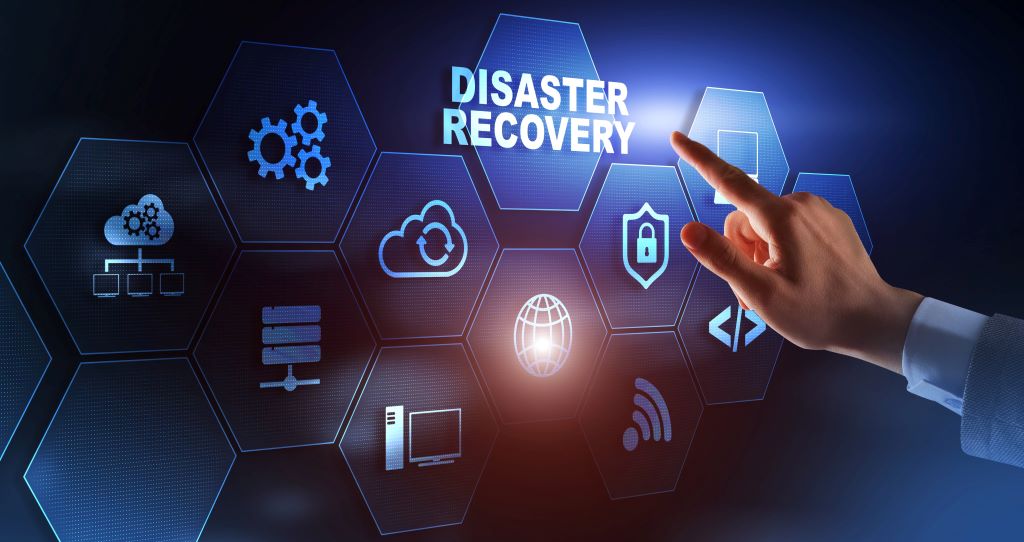
A screen with lots of hexagonal tiles. The title tile is Disaster Recovery. the other tiles show icons such as cogs, security shields and padlocks, computers, wifi and the cloud
Article

Use ISO 22301 to manage your business continuity planning

Home › SMEs

Within the global economy, small and medium-sized enterprises (SMEs) play a significant role. According to the World Bank, SMEs account for roughly 90% of all businesses worldwide. And they make a substantial contribution both in terms of job creation and economic growth. However, evidence shows that SMEs can be more vulnerable to disruptions than larger organisations. For example, natural disasters, cybercrime, or a pause in production. So, we would recommend that SMEs manage your business continuity planning by having a business continuity plan (BCP) to ensure survival in the face of unexpected events.

A BCP is one proactive approach you can take to protect your business. It ensures that your business can continue to operate during and after a disruptive event. A BCP should cover all aspects of your business, including your people, processes, systems, and facilities. It should also identify your critical functions/departments and resources. That is, those which are necessary for the business to continue to operate normally and successfully.

Why is a business continuity plan important for SMEs?

There are several reasons why a BCP is critical for SMEs. Firstly, SMEs often have limited resources. So if faced with a significant unforeseen incident, they may not be as resilient as their bigger counterparts to get through the financial losses or operational interruption. Secondly, SMEs often have fewer employees. Therefore they won’t have the same level of expertise to hand, as larger organisations, to manage a crisis immediately. Finally, SMEs are often reliant on a small number of key suppliers. Consequently, a disruption to their supply chain could have a damaging impact on their business.

What is ISO certification?

ISO certification is a globally recognised standard which can support SMEs to develop and implement an effective BCP. The ISO 22301 standard provides a step-by-step approach for business continuity management (BCM) and outlines the requirements for a BCP. The standard touches on every element of BCM. Typically, this includes risk assessment, business impact analysis, strategy development, and the implementation and testing of the plan.

ISO certification can benefit your SME in several ways. For example, it provides assurance to your stakeholders, who may include your customers, suppliers, and investors, that you have implemented best practices for BCM. This can enhance your company’s reputation and help you to attract and win new business. Also, ISO certification can help you to identify and resolve performance gaps in your BCM processes. This leads to increased efficiency and cost savings. Additionally, ISO certification can help you to comply with legal and regulatory requirements related to business continuity.

“Events over the last few years have shown that unexpected events can happen quickly, with no warning, and have devastating impacts for businesses of all sizes, and particularly SMEs. We are committed to supporting you to strengthen and protect your business by achieving ISO certification with ease, in the most cost-effective and time-efficient way possible.”

Claire Howard, Director, ISO-Cert Online Limited

For more information on ISO-Cert Online’s services or to discuss your requirements please contact us on 0333 014 7720 or email info@isocertonline.net.

Two intertwining cogs - one saying Business, the other saying Continuity
Article

Why is business continuity planning important for SMEs?

Home › SMEs

Many of our clients ask us “Why is business continuity planning important for SMEs?”. Chiefly, our answer is that business continuity management (BCM) is essential for small and medium-sized enterprises (SMEs). Because it helps them prepare for and mitigate the impact of unexpected events that can disrupt their operations. These events could be natural disasters, cyber-attacks, pandemics, supply chain disruptions, or other unforeseen circumstances that could interrupt normal business operations.

What evidence suggests that business continuity planning is important for SMEs?

To highlight the importance of business continuity planning for SMEs, according to the Federation of Small Businesses (FSB) and the British Insurance Brokers’ Association (BIBA):

  • 50% of SMEs fail to reopen after a major disaster such as a fire, flood or cyber-attack.
  • 66% of SMEs don’t have a business continuity plan in place to deal with such disasters.
  • 90% of SMEs in the UK underestimate the potential risks they face.
  • 40% of SMEs would be forced to close within a year if they suffered a major disaster.

What does business continuity planning involve?

Business continuity planning involves first identifying potential risks. Then developing strategies to minimise their impact. And having procedures in place to ensure that critical business functions can continue even during a crisis. As a result, it can be difficult to know where to start.

What is ISO 22301?

The ISO 22301 standard provides a framework for BCM. Moreover, it sets out the requirements for a business continuity plan. Indeed, the standard comprehensively covers they key aspects of BCM. these include risk assessment, business impact analysis, strategy development, and plan implementation and testing.

“We work with SMEs across all sectors to support them with establishing and maintaining effective business continuity management. Experience shows us that by implementing a business continuity plan, based on the ISO 22301 standard, businesses can increase their resilience, continue to satisfy their customers, protect their reputation and, importantly, stay competitive.”

Claire Howard, Director, ISO-Cert Online Ltd

For more information on ISO-Cert Online’s services or to discuss your requirements please contact us on 0333 014 7720 or email info@isocertonline.net.

A server room filled with computer servers from floor to ceiling
Article

Reasons why your business should be ISO 27001 certified

Home › SMEs

Cybersecurity is a growing concern for businesses of all sizes, and small and medium-sized enterprises (SMEs) are no exception. Often, with constrained resources and limited cybersecurity training, SMEs are vulnerable to cyber-attacks. Critically, these can result in data breaches, downtime, and financial losses. So, in this article, we explore the reasons why your business should be ISO 27001 certified.

The statistics provide compelling evidence that cyber-attacks are a significant threat to SMEs. Indeed studies are conducted all the time to monitor changes to these trends.

  • 43% of cyber-attacks target small businesses. (Source: Verizon)
  • 66% of small business owners report that they are not concerned about cyber threats, and 59% do not have a contingency plan for responding to cyber-attacks. (Source: Nationwide)
  • 48% of data security breaches are caused by acts of malicious intent, with the remaining 52% caused by human error or system failure. (Source: IBM)

So that’s where ISO 27001 certification comes in:

Protecting against cyber threats and data breaches

Undoubtedly, cyber-attacks are becoming increasingly popular and sophisticated. Accordingly, SMEs need to identify and address potential security risks and vulnerabilities in your information systems, networks, and applications. Here, ISO 27001 provides a framework for SMEs. Since it supports you in implementing effective security measures, it protects your business against cyber threats and data breaches.

Building trust and credibility

ISO 27001 certification demonstrates your commitment to information security best practices. As a result, it can enhance your reputation with customers, partners, and stakeholders. Primarily, it evidences clearly that you take cybersecurity seriously and are taking appropriate measures to safeguard your business and customers.

Enhancing operational efficiency

Implementing ISO 27001 can help you to streamline your information security management processes. Thus improving operational efficiency. In turn, this can reduce the risk of downtime and data loss. Ultimately resulting in cost savings, improved business performance and more engaged and empowered staff.

Complying with regulatory requirements

Many SMEs operate in sectors and industries that are subject to regulatory requirements for information security. Typically, these include such as healthcare, finance, and government. Hence ISO 27001 can help SMEs meet these requirements and avoid potential fines and legal liabilities.

Increasing business opportunities

ISO 27001 certification can give you a competitive advantage by demonstrating your commitment to information security. Naturally, this opens up new business opportunities with clients in both domestic or international markets. Companies which understand the risk of poor information security are more likely to require their suppliers to have ISO certification.

Conclusion

In summary, ISO 27001 certification is a valuable and sensible investment for all businesses. But especially for SMEs looking to protect your sensitive information, build trust with stakeholders, improve operational efficiency, comply with regulatory requirements, and increase business opportunities.

Don’t wait until it’s too late. Invest in ISO 27001 certification today to defend your business against cyber threats and data breaches.

Next steps

For more information on ISO-Cert Online’s services or to discuss your requirements please contact us on 0333 014 7720 or email info@isocertonline.net.

Privacy Settings
We use cookies to enhance your experience while using our website. If you are using our Services via a browser you can restrict, block or remove cookies through your web browser settings. We also use content and scripts from third parties that may use tracking technologies. You can selectively provide your consent below to allow such third party embeds. For complete information about the cookies we use, data we collect and how we process them, please check our Privacy Policy
Youtube
Consent to display content from - Youtube
Vimeo
Consent to display content from - Vimeo
Google Maps
Consent to display content from - Google
Spotify
Consent to display content from - Spotify
Sound Cloud
Consent to display content from - Sound